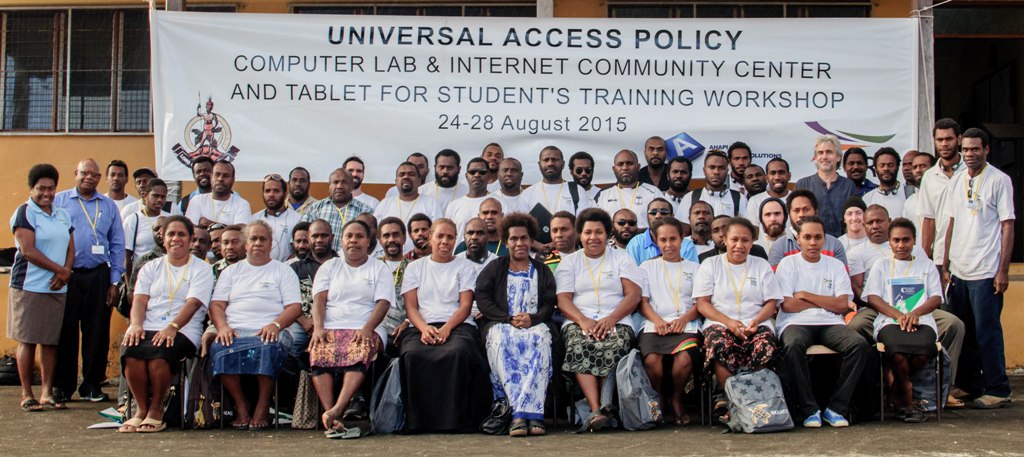
The UAP Computer Lab and Internet Community Centre (CLICC) and Tablets
for Students (TFS) Training Workshop closed on Friday 28th August 2015
after a successful week. 63 participants, teachers and zone curriculum
advisers from 19 schools, had traveled to Port Vila for the training in
the operation and administration of their facilities. The training also
aimed to inspire the participants and challenge them to integrate their
new digital resources into the teaching and learning environment. (Article by David Leeming for the contractors Ahapi ICT Solutions)
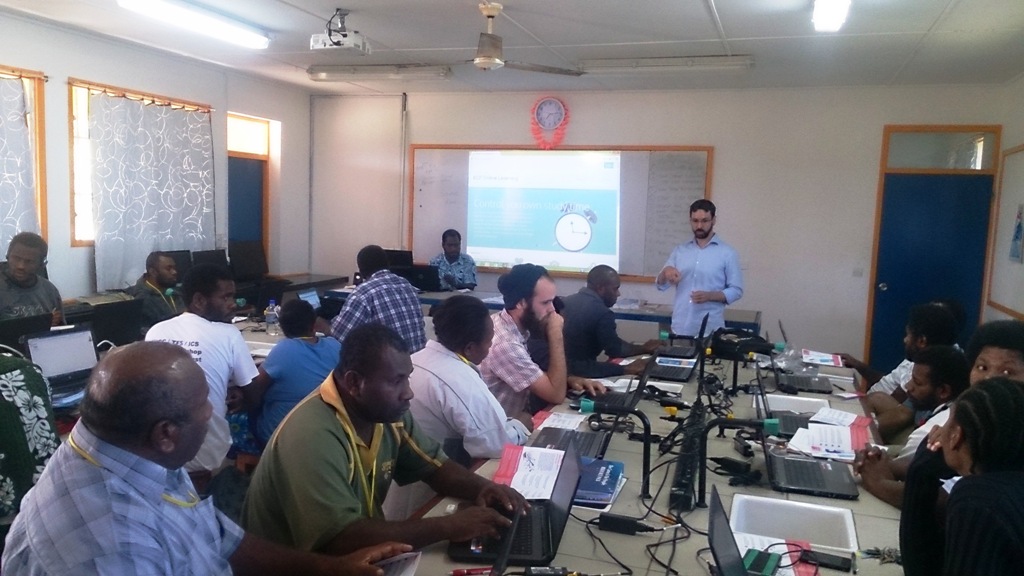
Trainer Ghislain Hachey and participants during one of the sessions (above).
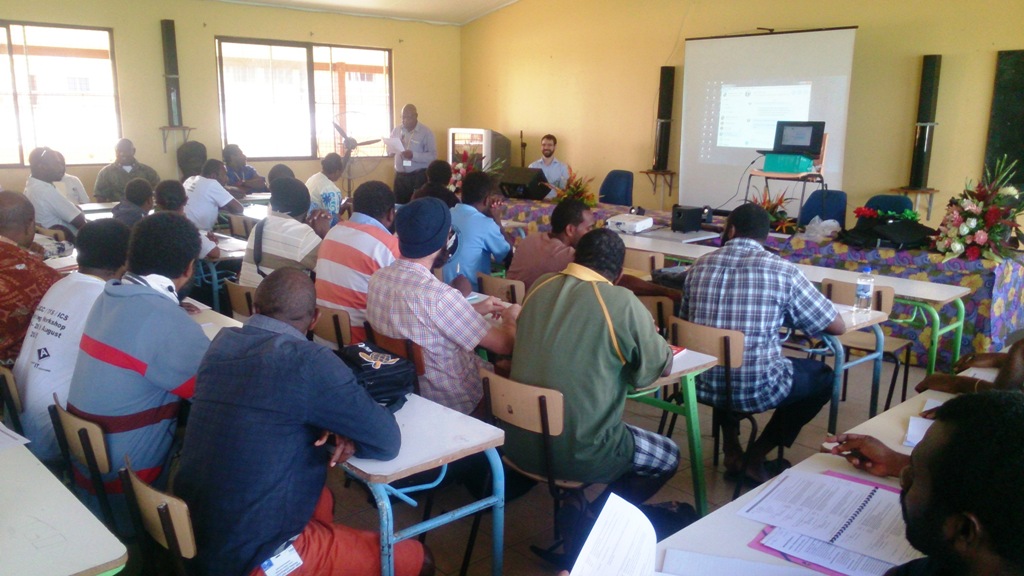
Participants being briefed on a live link-up with Suva to hear about USP's e-learning programmes and support for ICTs in Education.
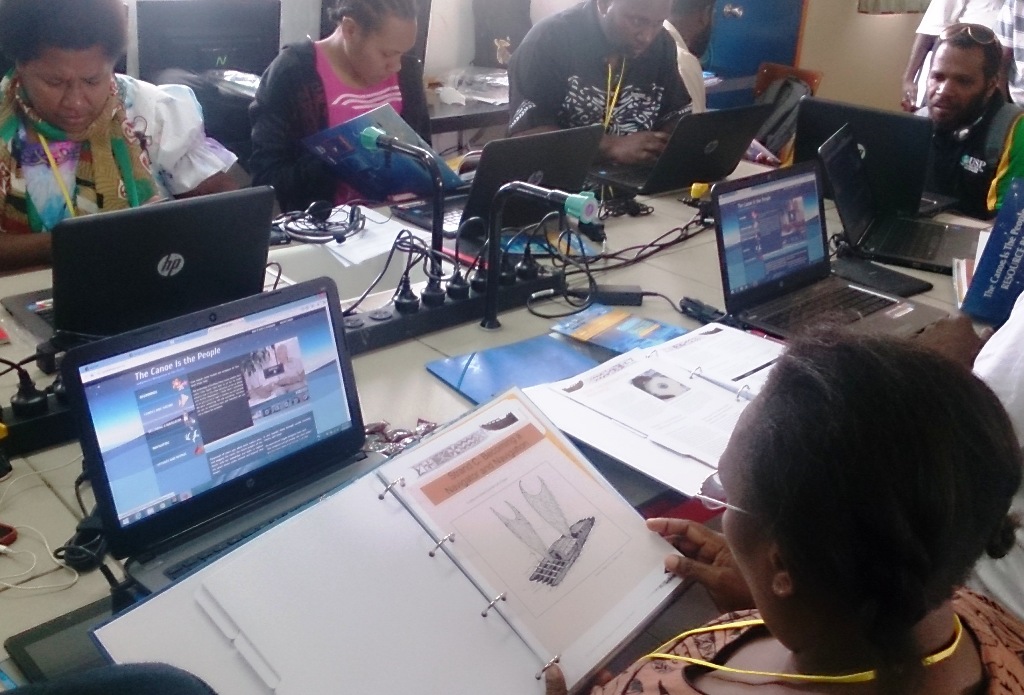
Participants reviewing curricular resource packs provided by UNESCO, during the training on local content development.
School and Community Portals
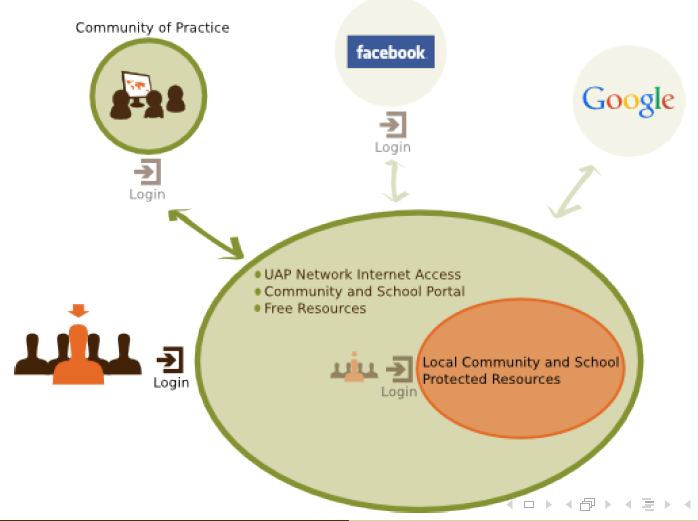
Each of the 19 schools receiving computer labs, broadband Internet connections, class sets of tablet computers and where necessary, solar power, are also receiving gateway servers that are pre-loaded with many gigabytes of digital educational resources including the RACHEL collections in English and French and collections from Vanuatu's Ministry of Education, the Secretariat of the Pacific Community, UNESCO and E-Learning for Kids.
Local Content
In line with Vanuatu's Universal Access Policy, which foregrounds the need for local content and local content capacity, the servers also provide open source tools for local content development such as Wordpress and Mediawiki and for file sharing and storage with OwnCloud. During the training, participants learned basic website skills and created their own Wordpress pages. They learned basic wiki skills and reviewed thematic curricular resources from UNESCO (Canoe is the People, Marovo Reef and Rainforest) as inspiration for local content projects where students can engage in authentic learning assignments involving the community. For instance, "community encyclopedias" (wikis) running locally on the gateway servers and accessible via their local wireless network.
More advanced features include the incorporation of School Tool, a school administration tool that has been successfully used in Vanuatu (Rensarie College). The gateways are also used to administer access and user management (Mikrotik User Manager), content filtering, backup and antivirus services.
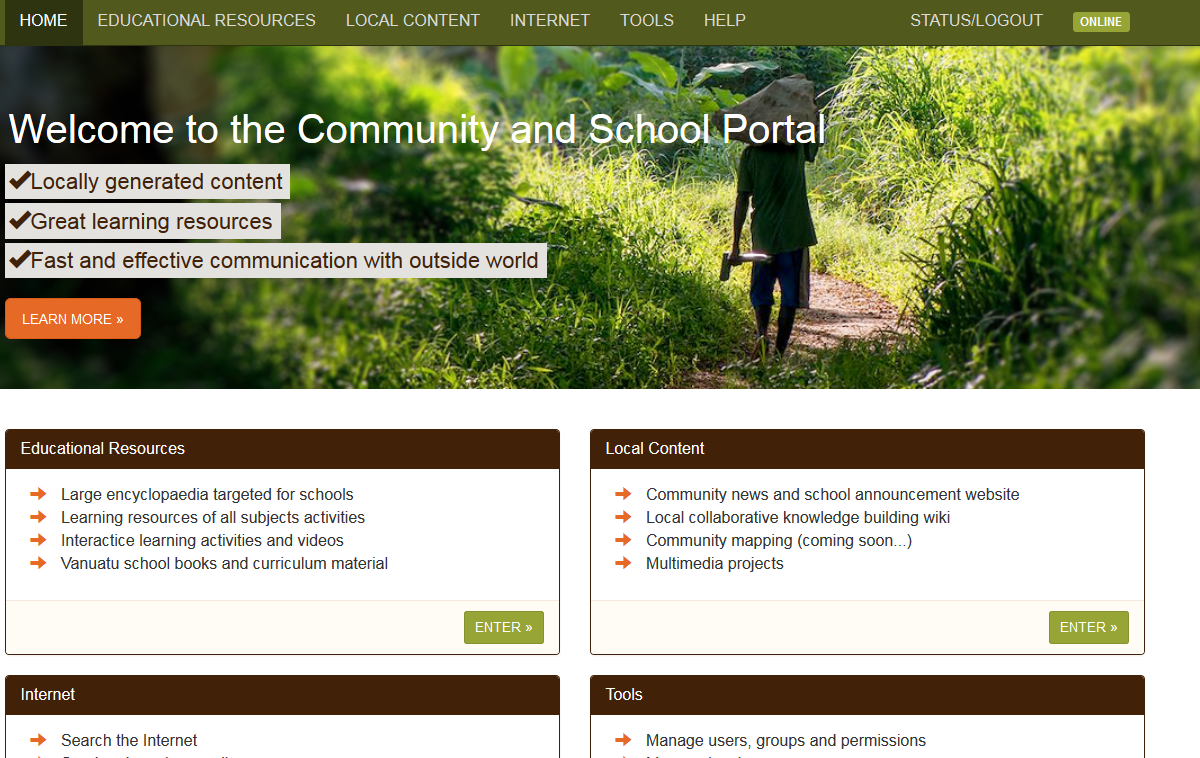
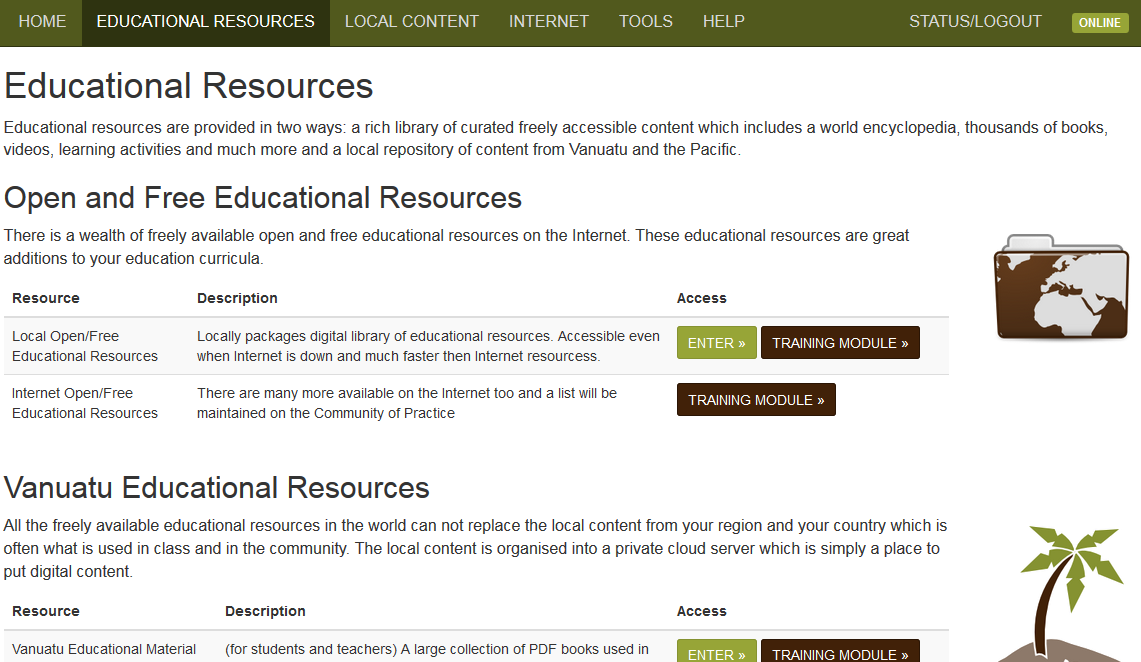
(above and below) The local Portal on the gateway servers.
Community of Practice
This website also serves as the online platform for a Community of Practice. This is in line with the National ICT Policy – which aims to unleash creative collaboration between all stakeholders
The Community of Practice will serve as an online hub for the growing community of schools connected through the UAP. It is the foundation for on-going support and growth. The workshop participants accessed this community website throughout the week as an integral part of the training – learning the skills and attitudes for creative collaboration. The Community of Practice website also contains all the Training modules and resources that will be used during this week’s workshop, and these can be used to cascade the training to more schools and communities.